
Quick answer
Suzhou is China’s garden city, with over 2,500 years of history and a collection of 9 UNESCO-listed classical gardens that represent the pinnacle of Chinese landscape design. Crisscrossed by canals from the Grand Canal system, it is often called the “Venice of the East.” It makes an easy day trip from Shanghai (just 25-35 minutes by HSR), but spending a night is highly recommended — the old town is magical in the early morning and evening after day-trippers leave.
Booking warnings
- Suzhou Museum requires advance reservation (free, released 7 days ahead via WeChat mini-program “苏州博物馆”). It is extremely popular and often fully booked, especially on weekends. Designed by I.M. Pei — this alone is worth the visit.
- Classical gardens (Humble Administrator’s Garden, Lion Grove, etc.) can sell out on weekends and holidays. Book via WeChat or on-site; advance booking recommended for peak season (April-May, September-October). Approximately ¥70-90 for Humble Administrator’s Garden (off-peak/peak); ~¥30-40 for Lion Grove. Verify current prices.
- Water towns (Tongli, Zhouzhuang, Luzhi) charge entry (~¥100) and can be booked online or on-site. Avoid national holidays.
- Gardens are NOT wheelchair or stroller accessible — they have steps, thresholds, and uneven stone paths throughout.
Best Areas to Stay
- Pingjiang Road / Old Town (Gusu District): Historic canal area, boutique hotels, tea houses, atmospheric. Close to Suzhou Museum, Humble Administrator’s Garden, and Lion Grove. BEST location for tourists.
- Suzhou Museum / Humble Administrator’s Garden area: Central for the main sights, convenient but less atmospheric than Pingjiang Road.
- Shantang Street area: Historic canal street connecting to Tiger Hill, touristy but pretty, especially lit at night.
- Suzhou Industrial Park (SIP) / Jinji Lake: Modern district with international hotels, business, and the Jinji Lake skyline. Far from old town sights (20-30min taxi); NOT recommended for tourists focused on gardens and canals.
- Note: Stay INSIDE the old town (Gusu District) for the best experience. SIP is convenient for business but far from Suzhou’s charm.
Arrival & Transport
- Suzhou does NOT have its own commercial airport. Use Shanghai airports (SHA ~1hr by HSR from Shanghai Hongqiao; PVG ~2hrs by bus/HSR+metro) or Wuxi Sunan Shuofang International Airport (WUX, closer but fewer flights).
- Suzhou Station: HSR station closer to the old town and major sights. Most trains from Shanghai stop here.
- Suzhou North: HSR station farther from old town.
- Suzhou Industrial Park Station: For SIP area.
- Metro covers main areas; ¥2-7 per trip.
- Bicycles are excellent for exploring old town and canals.
- Taxis/Didi within the old town; many sights are walkable or a short ride apart.
- To water towns (Tongli, Zhouzhuang): Bus or taxi 40-60min from Suzhou.
Top Sights
Humble Administrator’s Garden (Zhuozheng Yuan) / 拙政园
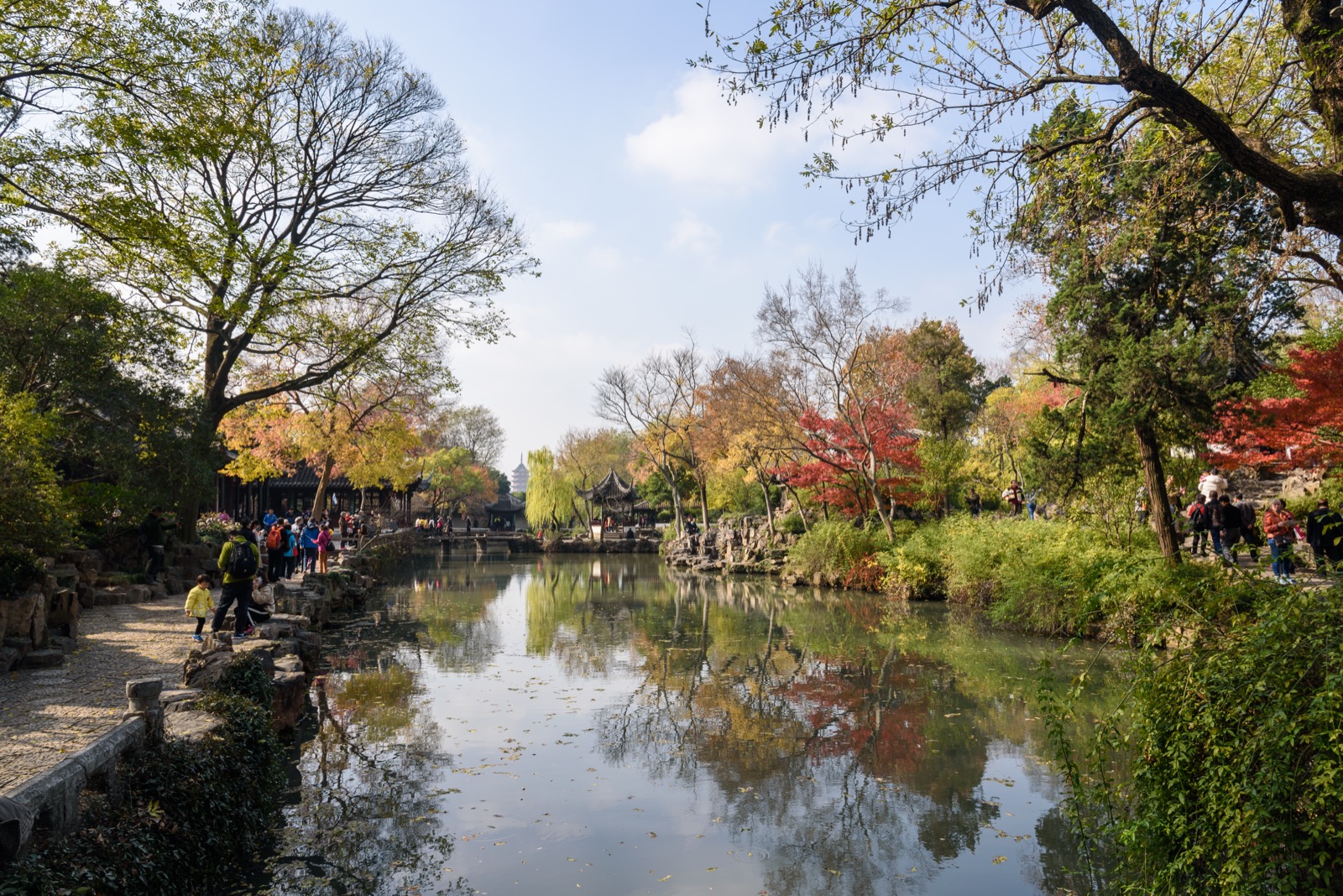
The largest and most famous Suzhou garden (UNESCO), dating to 1509 during the Ming dynasty. Water covers 60% of the garden; pavilions, bridges, and corridors frame carefully composed views. Approximately ¥70 off-peak / ¥90 peak (verify current prices). Allow 1.5-2 hours. Can be very crowded — visit near opening time if possible.
Lion Grove Garden (Shizi Lin) / 狮子林
UNESCO garden famous for its labyrinth of Taihu (Lake Tai) rock formations that resemble lions in various poses. Children especially enjoy climbing through the rock maze. Smaller than Humble Administrator’s but very distinctive. Approximately ¥30 off-peak / ¥40 peak (verify current prices). Allow 1-1.5 hours.
Suzhou Museum / 苏州博物馆
Designed by I.M. Pei (architect of the Louvre Pyramid), who grew up in Suzhou. The museum blends Suzhou architectural traditions (white walls, dark tiles, water courtyards) with modern geometric design. Free but reservation required — book 7 days ahead. Closed Mondays. Allow 1.5-2 hours. Fully accessible (modern building).
Tiger Hill (Huqiu) / 虎丘
A 36m hill with the leaning Yunyan Pagoda (built 961 CE, often called the “Leaning Tower of China”), historic sites, and gardens associated with Suzhou’s founding 2,500 years ago. Approximately ¥60-80 (verify current price). Allow 1.5-2 hours.
Pingjiang Road / 平江路
Historic canal-side street in central Suzhou with preserved old buildings, tea houses, snack stalls, boutique shops, and small bridges over canals. Free to walk; best in late afternoon or evening when lanterns are lit. Can be crowded but less so in the early morning.
Shantang Street / 山塘街
A 1,200-year-old canal street connecting to Tiger Hill, with traditional buildings, boat rides, and evening lanterns. Free. More touristy than Pingjiang Road but beautiful at night.
Tongli Water Town / 同里古镇
One of the best-preserved ancient water towns near Suzhou (~30min by car/bus). Canals, stone bridges (including the famous “Three Bridges”), and Ming-Qing dynasty houses. Approximately ¥100 (verify current price). Less commercialized than Zhouzhuang but still busy on weekends.
Zhouzhuang Water Town / 周庄古镇
The most famous water town, known as the “Venice of the East,” but also the most touristy. ~1hr from Suzhou. If you have only one water town, Tongli is generally preferred for less crowds.
Classic Routes
One perfect day
Morning: Suzhou Museum (arrive at opening 9:00; reserve ahead 7 days) → Humble Administrator’s Garden (next door to museum, 1.5hrs).
Lunch: Local Suzhou restaurant in the old town. Try Su-style noodles or Songshu Guiyu.
Afternoon: Lion Grove Garden (1hr, right next to Humble Administrator’s) → Tiger Hill (optional, 1.5hrs) OR walk Pingjiang Road.
Evening: Pingjiang Road stroll (lanterns, canal views, tea house or dinner). If staying overnight, Shantang Street at night is also beautiful.
2 days
- Day 1: Suzhou Museum → Humble Administrator’s Garden → Lion Grove → Pingjiang Road evening.
- Day 2: Tiger Hill (morning) → Tongli water town (afternoon, 3-4hrs) OR visit Master of Nets Garden (Wangshi Yuan, smaller, intimate, beautiful at night when it sometimes has evening cultural performances).
Day trip from Shanghai
Take an early HSR from Shanghai Hongqiao to Suzhou Station (~30min). Suzhou Museum (reserve ahead) → Humble Administrator’s Garden → lunch → Lion Grove or Tiger Hill → Pingjiang Road → return to Shanghai. Note: this is a full day but doable. However, the old town is magical after day-trippers leave around 5pm — staying overnight is strongly recommended.
Food to Try
Suzhou cuisine (part of Jiangsu/淮扬 cuisine) is known for sweet, delicate flavors and freshwater ingredients.
- Squirrel-shaped mandarin fish (songshu guiyu / 松鼠桂鱼): The iconic Suzhou dish — whole mandarin fish scored, deep-fried in a squirrel shape, and served with a sweet-sour tomato sauce. Visually impressive.
- Suzhou-style mooncakes (xianrou yuebing / 鲜肉月饼): Savory pork mooncakes, a Suzhou specialty available year-round (not just Mid-Autumn Festival). Look for long queues at local bakeries.
- Hairy crab (dazhaxie / 大闸蟹): Seasonal specialty, October-November. Crabs from nearby Yangcheng Lake are the most prized. Served steamed with ginger-vinegar dip. A major draw for Chinese tourists in autumn.
- Su-style noodles (苏式面): Fine wheat noodles in soup with various toppings (braised pork, shrimp, seasonal vegetables). A breakfast and lunch staple. Look for old noodle shops in the old town.
- Sweet osmanthus glutinous rice cake (guihua gao / 桂花糕): Sweet rice cake infused with osmanthus fragrance. A seasonal autumn treat.
- Biluochun tea (碧螺春): Famous green tea grown in the hills near Suzhou (Dongting Mountain). One of China’s top green teas, with a delicate, floral aroma. Spring harvest is best.
- Freshwater dishes: Whitebait (银鱼), shrimp, and fish from Taihu Lake and local waterways.
Night Experience
- Pingjiang Road at night: Lanterns along the canal, small bars and tea houses, quiet canal views. Less crowded than daytime and very atmospheric. Free.
- Shantang Street night view: Illuminated canal with traditional boats, lanterns, and old buildings. Beautiful for photography. Free.
- Jinji Lake (SIP): Modern skyline on the east side of town, musical fountain, restaurants. Only if you are staying in SIP; otherwise not worth a special trip from old town.
- Master of Nets Garden night performances: Occasionally has evening garden visits with traditional music performances (seasonal; check schedule).
- Suzhou is not known for wild nightlife — it is more about evening canal walks, tea houses, and quiet dinners.
Best Time to Visit
- Spring (March-May): Gardens in bloom, mild temperatures (15-25C), best season overall. April-May is peak for garden beauty.
- Autumn (October-November): Comfortable temperatures, hairy crab season (big draw for Chinese tourists), autumn foliage. Excellent season.
- Summer (June-August): Hot (33-37C) and humid. The gardens have shade but the heat is draining.
- Winter (December-February): Cold (3-8C), quiet, few tourists. The gardens have a sparse beauty in winter, and prices are lower.
- Gardens are beautiful in all seasons, but spring blossoms and autumn colors are peak. Avoid national holidays.
Culture & History
- Founded 514 BCE: Suzhou was established by King Helu of Wu during the Spring and Autumn period, making it over 2,500 years old. The city’s canal grid has remained largely intact.
- “Venice of the East”: Suzhou is crisscrossed by canals from the Grand Canal system. Marco Polo allegedly visited and compared it to Venice.
- UNESCO Classical Gardens: Nine gardens in Suzhou are listed as UNESCO World Heritage Sites. Built by scholars, officials, and wealthy merchants as microcosms of nature — rocks as mountains, ponds as lakes, pavilions as viewing platforms. The gardens represent the pinnacle of Chinese garden design, where every view is carefully composed.
- Suzhou Museum: Designed by I.M. Pei (1917-2019), the renowned architect who grew up in Suzhou (his family owned the Lion Grove Garden for a time). The museum opened in 2006 and was his last major work. It is a masterpiece of modern architecture that respects Suzhou traditions.
- Silk capital: Suzhou has produced silk for over 2,000 years. Suzhou embroidery (苏绣) is one of China’s four famous embroidery styles, known for its extreme detail and double-sided embroidery technique.
- Kunqu opera: The oldest form of Chinese opera (600+ years), originated in the Suzhou/Kunshan area. Known for its elegant music and lyrics, it influenced all later Chinese opera forms including Peking Opera.
Accessibility & Tips
- Classical gardens are NOT wheelchair or stroller accessible: Steps, uneven stone paths, narrow doorways, rockeries, and high thresholds are everywhere. This is fundamental to garden design.
- Pingjiang Road: Flagstone streets with some bumps and small bridges (some have steps). Walkable but not suitable for wheelchairs.
- Suzhou Museum: Fully accessible (modern building with elevators).
- Shantang Street: Stone paths, some bridges with steps.
- Canal boats: May require stepping into small boats; not accessible.
- Tongli/Zhouzhuang water towns: Cobblestone lanes, stone bridges with steps, NOT accessible.
- Fitness: Relaxed/moderate: Gardens require walking but distances are short between sights in the old town. Expect 8,000-15,000 steps/day.
- Gardens are small compared to imperial parks in Beijing. You can see 2-3 gardens in a day without rushing. Don’t try to visit 4+ gardens in one day — “garden fatigue” sets in.
Common mistakes
- Visiting only Humble Administrator’s Garden and skipping the others — each garden has a distinct character. Lion Grove’s rock maze is fun; Master of Nets Garden is small and intimate; the Surging Wave Pavilion (Canglang Ting) has a different feel.
- Not reserving Suzhou Museum — it is free but fills up 7 days in advance. Designed by I.M. Pei, it is one of the best museums in China.
- Trying to visit 4+ gardens in one day — garden fatigue sets in by the third garden. Two gardens per day is plenty.
- Going to Zhouzhuang or Tongli on weekends — extremely crowded with shoulder-to-shoulder visitors. Go on a weekday.
- Buying “silk” from street vendors — it is often synthetic. Buy from reputable silk shops or the silk museum.
- Day-tripping and leaving by 5pm — the old town is magical after day-trippers depart, when lanterns are lit and the canals are quiet. Stay overnight if possible.
- Confusing Suzhou Station and Suzhou North — Suzhou Station is much closer to the old town and gardens. Take trains to Suzhou Station if possible.
Sources
- Suzhou Museum: https://www.szmuseum.com/
- UNESCO Classical Gardens of Suzhou: https://whc.unesco.org/en/list/813/